
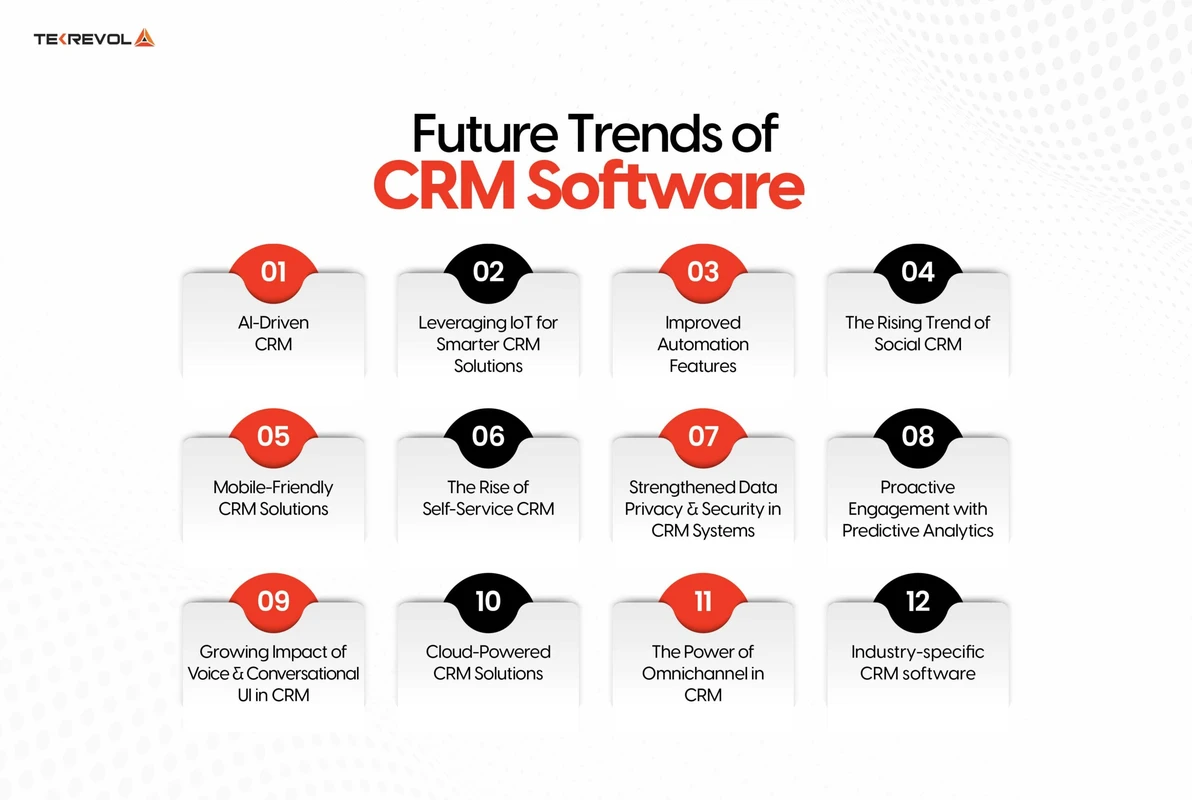
rg2.bahasberita.com – Customer Relationship Management (CRM) trends in 2025 show robust market expansion driven predominantly by AI-powered personalization, cloud computing adoption, and mobile CRM growth. The North American CRM market is projected to increase from $27.16 billion in 2024 to $72.06 billion by 2033, achieving an 11.45% compound annual growth rate (CAGR). Integrating advanced analytics enhances customer lifetime value (CLV) and operational efficiency, while market leaders like Salesforce report solid quarterly revenues amid slowing growth and rising customer acquisition costs (CAC).
Advertisement
CRM systems have evolved into pivotal tools for businesses executing digital transformation and customer-centric strategies. As artificial intelligence (AI) and cloud computing continue to mature, the industry experiences novel shifts impacting financial performance and market dynamics. Salesforce’s recent Q3 CY2025 results, featuring $10.26 billion in revenue with 8.6% year-on-year growth, embody both the potential and the challenges within the CRM space. Investors and businesses must weigh these trends alongside CRM adoption in small and medium enterprises (SMEs) and large corporations managing customer engagement in an increasingly digital economy.
This analysis explores the financial implications of CRM market developments, emphasizing North America’s growth forecasts, AI integration, Salesforce’s fiscal metrics, and the strategic value of personalized customer experiences powered by AI analytics. Furthermore, it investigates economic opportunities and risks associated with CRM investments to provide a comprehensive understanding for stakeholders navigating this dynamic sector.
With this foundation, we will delve into detailed market data, financial performance of key players, AI’s transformative role in CRM strategies, and the investment outlook shaping CRM markets through 2033.
CRM Market Growth and Trends: North American and Global Perspectives
The CRM market continues its trajectory as an essential segment within enterprise software, fueled by technology-driven shifts and evolving customer expectations. Based on the latest data from ResearchAndMarkets.com (September 2025), the North American CRM market is expected to expand significantly, growing from a valuation of approximately $27.16 billion in 2024 to $72.06 billion by 2033. This represents an 11.45% CAGR that underscores CRM’s vital role in business digitization.
North American CRM Market Dynamics and CAGR Analysis
North America’s CRM growth is primarily catalyzed by widespread cloud computing adoption and increasing use of AI-enabled analytics within CRM platforms. Cloud CRM solutions now constitute the majority of deployments, enabling scalability and cost efficiency, particularly appealing to SMEs undertaking digital transformation. Mobile CRM adoption also accelerates as enterprises prioritize real-time customer engagement and multi-channel communication.
Advertisement
The detailed breakdown of market growth exhibits particular strengths in AI-powered customer service applications, which account for 22.1% of total CRM revenue in 2025. This segment reflects a growing preference for automation-enhanced customer interaction.
Global CRM Market Valuation and Drivers
Globally, the CRM industry is expected to reach a market capitalization of around $144 billion by 2030. AI-driven personalization strategies, increased cloud CRM adoption, and integration with e-commerce platforms are principal drivers. These factors collectively increase customer lifetime value, improve net promoter scores (NPS), and reduce churn rates through tailored engagement tactics.
Research highlights indicate that mobile CRM usage crosses 60% penetration rates in digitally mature markets, further emphasizing mobile CRM’s strategic importance in accessing customers through smartphones and tablets.
Region |
Market Size (2024, US$B) |
Projected Market Size (2030, US$B) |
Projected Market Size (2033, US$B) |
CAGR (2024–2033) |
|---|---|---|---|---|
North America |
27.16 |
58.74 |
72.06 |
11.45% |
Global |
85.00 |
144.00 |
— |
9.7% |
This table summarizes the CRM market growth projections, highlighting North America as a leadership region with a CAGR surpassing global averages. Cloud computing, mobile CRM, and AI analytics are principal growth enablers across both regional and worldwide markets.
Financial Dynamics and Competitive Landscape of CRM Providers
Financial trends in 2025 indicate that market leaders, particularly Salesforce, maintain strong revenue streams but encounter challenges such as growth deceleration and elevated CAC payback periods. These elements have direct implications for profitability and investor confidence.
Salesforce Fiscal Performance: Q3 CY2025 Highlights
Salesforce’s Q3 CY2025 earnings report reveals revenues of $10.26 billion, marking an 8.6% increase year-over-year. The company projects Q4 revenues at $11.18 billion, consistent with a solid revenue base but indicative of slowing growth compared to the five-year average expansion rate near 15%. Notably, the CAC payback period extends to 137.2 months (approximately 11.4 years), signifying a prolonged time to recover customer acquisition costs.
This metric has implications for operational cash flow and margin pressure, especially as Salesforce continues heavy investments in AI-powered CRM features and international expansion.
Metric |
Q3 CY2025 |
Q3 CY2024 |
YoY Growth |
5-Year CAGR |
|---|---|---|---|---|
Revenue (US$ Billion) |
10.26 |
9.45 |
8.6% |
~15% |
CAC Payback Period (Months) |
137.2 |
122.3 |
12.1% |
— |
Operating Margin |
14.2% |
15.6% |
— |
— |
Salesforce’s financial profile reflects slowing top-line acceleration coupled with increased marketing and sales expenditures leading to longer CAC recovery. While operating margins remain positive, efficiency gains will be essential to sustain profitability.
Market Competition and Challenge Overview
The CRM ecosystem faces intensifying competition from emerging vendors innovating with AI-powered platforms and niche solutions tailored to SMEs. Cloud-based CRM adoption continues to consolidate but with rising competitive pricing pressure. Alternative deployment models such as hybrid CRM systems combining on-premise and cloud elements gain traction among larger enterprises with stringent data compliance needs.
Investors should consider the balancing act between ongoing innovation expenditures and achieving sustainable profitability as critical risk factors.
Artificial Intelligence and Analytics: Transforming CRM Strategies
AI’s integration into CRM platforms is not merely a technological upgrade but a strategic pivot that reshapes core customer engagement and retention metrics. ai-driven crm solutions provide actionable insights enhancing customer lifetime value (CLV) and improving key indicators like net promoter score (NPS).
AI-Powered Personalization and Customer Lifetime Value Enhancement
AI algorithms enable dynamic segmentation and personalized customer journeys by analyzing behavior patterns, purchase history, and engagement signals in real time. This leads to increased cross-sell and upsell opportunities, directly elevating CLV. For example, AI-powered recommendation engines used by e-commerce firms integrated with CRM systems improve conversion rates by up to 20%, according to September 2025 industry surveys.
SMEs increasingly deploy AI CRM modules to automate customer follow-ups and optimize campaign targeting, mitigating resource constraints while improving retention.
Data Integrity and Ethical AI Deployment
Implementing AI within CRM demands rigorous data governance to ensure data quality, accuracy, and privacy compliance with regulations such as GDPR and CCPA. Organizations adopting transparent AI practices—explaining decision models and enabling human oversight—are better positioned to build trust with customers.
Balancing automation with human interaction remains critical, preserving personalized engagement without sacrificing efficiency.
Advanced Analytics and Operational Efficiency Gains
Integration of predictive analytics into CRM dashboards enables sales and service teams to anticipate customer needs, forecast churn probabilities, and optimize resource allocation. These capabilities enhance operational efficiency and improve net revenue retention rates, supporting sustainable growth.
Sample use cases include AI-driven lead scoring improving sales pipeline velocity by 15% and predictive customer service reducing support costs by 10%.
Economic Impact, Risk Assessment, and Investment Outlook
The CRM sector presents a compelling investment opportunity given its high-growth potential, though several economic and operational risks merit consideration. Market growth outpaces general technology sector averages, supported by digital transformation across industries.
CRM Industry Growth Versus Broader Technology Sector
At an 11.45% CAGR in North America and 9.7% globally, CRM market expansion surpasses the broader enterprise software sector average growth of approximately 7% per annum (2023–2025 data). This strong growth reflects escalating demand for AI-powered customer engagement solutions.
From an investment perspective, CRM stocks like Salesforce have shown resilience but face margin compression risks due to rising CAC and intensifying competition.
Risk Factors and Mitigation Strategies
Key risks include:
Mitigation strategies involve diversification of product offerings, increased investment in AI-driven automation to reduce CAC, and expansion into underpenetrated SMEs and emerging markets.
Investment Projections and ROI Estimates
Based on Salesforce’s latest revenue growth and margin profiles, a conservative projection assumes annual revenue growth moderation to 7-9% through 2027 with incremental margin improvements from AI automation savings. A hypothetical discounted cash flow (DCF) model estimates a weighted average cost of capital (WACC) of 8%, projecting a five-year ROI of approximately 12%, adjusted for competitive risks.
Investment Metric |
2024 Actual |
2025 Forecast |
2027 Projection |
Comment |
|---|---|---|---|---|
Revenue Growth YoY |
15% |
8.6% |
7-9% |
Slowing due to market maturity |
Operating Margin |
16% |
14.2% |
15-16% |
Efficiency gains expected |
CAC Payback (Months) |
122 |
137 |
120 |
Efforts to optimize marketing spend ongoing |
Projected 5-year ROI |
— |
12% |
— |
Based on DCF with WACC 8% |
SME and Large Enterprise CRM Adoption Effects
SMEs demonstrate faster CRM adoption rates owing to cloud CRM affordability and ease of deployment, driving digital transformation that enables operational cost savings and improved customer retention. For large enterprises, CRM investments focus on complex AI analytics integration and compliance, supporting enhanced customer experiences and segmented marketing.
The resulting economic impact extends beyond direct revenue growth, increasing workforce productivity and reducing churn-related costs.
Future Outlook and Technological Innovations in CRM (2025–2033)
Looking ahead, CRM technology will continue maturing with several notable trends:
Companies that successfully blend AI innovation, data integrity, and operational efficiency stand to capture the largest CRM market share.
—
Frequently Asked Questions
What are the biggest trends driving crm market growth in 2025?
Key trends include AI-powered personalization, dominant cloud-based solutions, and expanding mobile CRM platforms, all supported by growth in e-commerce and digital transformation initiatives.
How is AI changing the CRM landscape financially and operationally?
AI increases customer lifetime value by improving personalization and retention, reduces operational costs through automation, and extends the CAC payback period due to upfront technology investments.
What is the financial outlook for major CRM providers like Salesforce?
Salesforce shows steady revenue growth (~8.6% YoY for Q3 CY2025) but faces slowing growth compared to prior years and rising CAC. Margin improvements rely on AI-driven efficiency gains.
How can businesses maximize customer lifetime value using modern CRM systems?
By leveraging AI analytics for personalized customer journeys, optimizing campaign targeting, and combining automated follow-ups with human interactions to build trust.
What challenges might impact CRM market growth in the near term?
Challenges include market saturation, escalating customer acquisition costs, regulatory compliance complexities, and rising competition from specialized CRM startups.
—
The CRM market in 2025 offers significant growth and innovation opportunities underpinned by AI and cloud technologies. Despite signs of decelerating growth among incumbents like Salesforce, the sector’s expansive market valuations and ongoing technological adoption position it as a compelling arena for investors and businesses. Companies that effectively enhance data quality, uphold ethical AI standards, and tailor customer experiences will drive superior financial outcomes and market share gains in the evolving CRM landscape. Monitoring key financial metrics such as CAC, CLV, and revenue growth will be essential for maintaining competitive advantage through 2033 and beyond.
Strategic investments aligned with CRM digital transformation can unlock operational cost savings, boost customer engagement, and deliver sustainable returns. Stakeholders should prioritize leveraging ai-powered crm analytics and expanding cloud/mobile platforms while managing regulatory and competitive risks—thus capitalizing on the strong economic impact and market expansion forecasted for the CRM sector in North America and globally.
Advertisement