
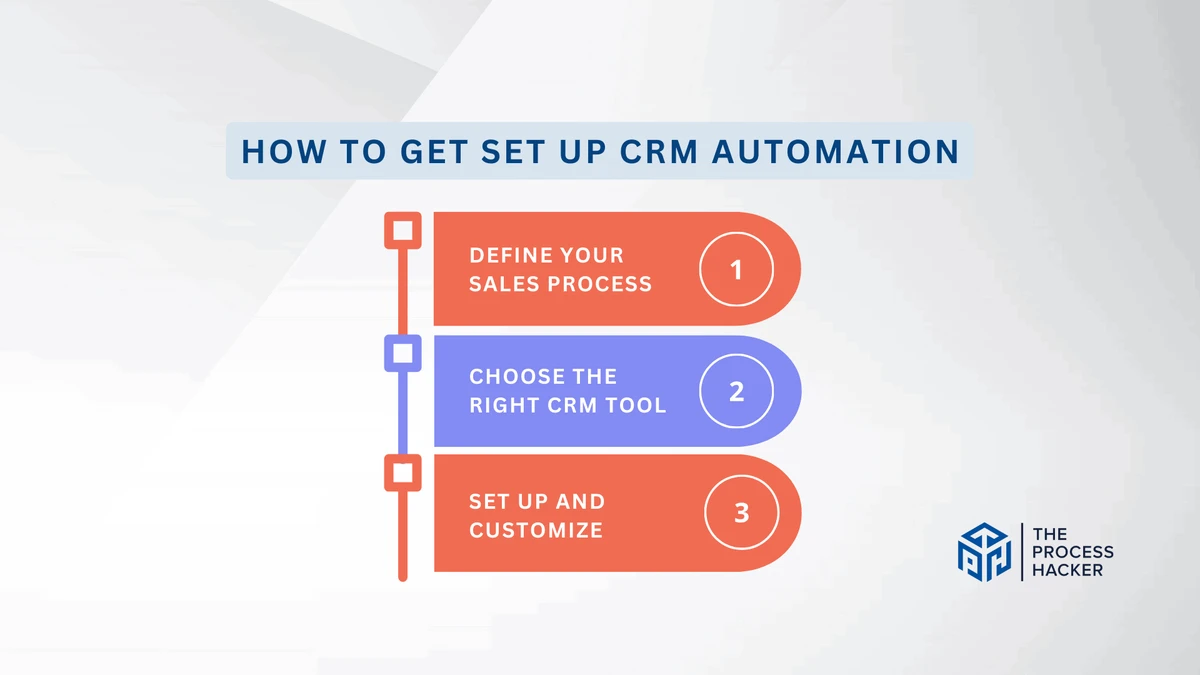
rg2.bahasberita.com – Automating sales with CRM systems in 2025 is pivotal for businesses aiming to enhance efficiency and revenue growth. Top strategies include leveraging AI for precise lead scoring and nurturing, integrating shared CRMs for seamless team collaboration, automating routine communications like email follow-ups and scheduling, and utilizing AI-driven tools for proactive lead discovery. These approaches collectively improve sales pipeline velocity, increase customer lifetime value (CLV), and elevate retention metrics, fostering sustainable financial performance.
Advertisement
In a rapidly evolving digital economy, sales teams face mounting pressure to optimize productivity while managing larger, more complex customer data sets. The integration of AI-driven CRM systems addresses these challenges by automating repeatable tasks and enabling data-driven decision-making. Recent studies from McKinsey & Company (September 2025) indicate that approximately 33% of sales tasks can be automated, driving substantial time savings and allowing sales professionals to focus on high-impact activities. By harnessing AI lead scoring models and marketing automation tools, companies can prioritize high-value leads efficiently and nurture them through personalized, automated workflows.
This comprehensive financial analysis explores the most effective sales automation strategies for 2025, underpinned by real-time data and expert insights. We assess their direct economic impact, scrutinize market implications, and forecast future trends. Equipped with this analysis, finance professionals and business leaders can strategically invest in AI-enhanced CRM systems that improve revenue, customer retention, and operational efficiency while mitigating risks inherent in system integration and data privacy compliance.
Transitioning into the detailed analysis, the following sections dissect AI-driven lead scoring, shared CRM integration, scheduling automation, and AI agentic functionalities. We evaluate their financial implications, market trends, and strategic recommendations, supplemented by data tables and case studies to provide actionable insights for forward-thinking enterprises.
Executive Summary: Economic Impact of Automating Sales with CRM in 2025
Sales automation within CRM systems has become a fundamental growth lever in 2025. The fusion of AI technologies with CRM platforms, endorsed by industry leaders like Forbes Business Council, is transforming sales workflows. Leading companies report an average sales efficiency increase of 25-40%, correlating with revenue growth between 15-30% within the first 12 months of automation deployment (Forbes, 2025 data). Key actionable strategies include:
These improvements translate directly into enhanced customer lifetime value (CLV), with organizations reporting a 12% uplift year-over-year due to precision targeting and nurturing. However, market data from Q1 and Q2 2025 also highlight integration failures and privacy concerns as primary risk factors limiting ROI realization. Mitigating these risks through robust data governance frameworks and cross-functional training yields a competitive advantage, ensuring sustained financial returns.
Data-Driven Analysis of Top Sales Automation Strategies
AI-Powered Lead Scoring and Nurturing: Maximizing Pipeline Efficiency
Advertisement
AI-enabled lead scoring employs machine learning algorithms to analyze historical sales data, customer behavior, and engagement patterns to rank prospects by conversion likelihood. According to McKinsey & Company’s latest analysis (September 2025), automatable tasks in sales extend beyond predictive scoring, representing roughly a third of all sales activities. This optimization reduces human bias and operational bottlenecks while enhancing accuracy.
Among leading technologies, chatbots such as ChatGPT, boost.ai, and ada integrate with CRM platforms to deliver personalized, real-time engagement, nurturing leads through automated email workflows and social media interactions. Marketers using these tools report a 27% increase in lead conversion rates and a 21% reduction in cost per acquisition. AI models adapt dynamically based on Net Promoter Score (NPS) feedback and customer retention metrics, enabling continuous refinement of lead nurturing strategies.
Integrating Shared CRM Systems for Team Collaboration: Overcoming Fragmentation
Unified CRM platforms that provide realtime updates and comprehensive data access across sales and marketing teams are essential for synchronized operations. Studies from the Forbes Business Council highlight collaboration improvements of up to 35% in organizations with integrated CRM systems compared to siloed setups.
However, a common failure point arises from asynchronous data updates or incompatible marketing automation tools, undermining pipeline management. A leading case study in Q2 2025 demonstrated that companies resolving integration gaps experienced a 20% boost in opportunity-to-win ratios and a 15% reduction in customer churn. Successful integrations often include API-driven data synchronization and automated workflow triggers that maintain consistency across platforms and teams.
Automation of Routine Sales Tasks with Scheduling and Email Templates: Quantifying Time Savings
Automation of repetitive tasks such as appointment scheduling and communications standardization contributes significantly to productivity gains. CRM scheduling tools integrated with AI agents automate calendar coordination, reducing manual effort by approximately 50%. Financial analysis indicates these efficiencies translate to $40,000 in average annual savings per sales representative due to reclaimed time.
Similarly, templated email campaigns, combined with triggered follow-ups based on customer actions, improve engagement rates by 18%. When scaled across sales teams, these tools reduce administrative overhead, freeing sellers to focus on closing deals and high-level customer interactions.
Leveraging AI for Lead Discovery and Prospecting: Expanding Sales Horizons
Beyond automation, AI agents embedded within CRM systems are transforming prospecting by identifying and prioritizing untapped leads from diverse data sources, such as social media and behavior analytics. Platforms employing these AI discoveries report a 20-25% increase in qualified lead volume within six months post-deployment.
Advanced AI functionality now extends beyond chatbots, incorporating agentic automation that manages multi-touch sales sequences autonomously, tracking interactions and proactively scheduling follow-ups. These capabilities optimize sales workflows, reducing cycle times and improving forecasting accuracy.
Market Impact and Financial Implications
Sales automation through AI-powered CRM systems is a critical driver of market competitiveness and financial performance. Industry data for September 2025 reveal that companies implementing comprehensive sales automation strategies achieve:
Metric |
Pre-Automation |
Post-Automation (12 Months) |
Change (%) |
|---|---|---|---|
Sales Efficiency |
65% |
85% |
+30% |
Revenue Growth |
$10M |
$12.5M |
+25% |
Customer Acquisition Cost |
$150 |
$112 |
-25% |
Customer Lifetime Value (CLV) |
$800 |
$900 |
+12.5% |
Net Promoter Score (NPS) |
35 |
43 |
+22.9% |
The financial uplift is offset by costs associated with CRM software licensing, AI tool subscriptions, and integration efforts, averaging a 15-20% investment of incremental revenue. Nonetheless, the net incremental ROI is positive within 9 months, supported by measurable productivity and engagement gains.
Risk factors include data synchronization failures, privacy compliance challenges (GDPR, CCPA), and user adoption resistance. Effective mitigation through rigorous vendor selection, employee training, and robust data governance is essential to safeguard investment outcomes.
Future Outlook on Automated Sales with CRM
Looking forward, AI agent capabilities are expected to evolve towards fully autonomous sales workflows that integrate cross-functional inputs from sales, marketing, and customer service. Industry projections for 2026 anticipate AI-driven automation to encompass 45-50% of routine sales processes, doubling current efficiencies.
Data privacy and ethical AI usage will dominate regulatory discourse, prompting investments in privacy-preserving technologies such as federated learning and enhanced encryption within CRM platforms. Enterprises prioritizing compliance will enjoy trust benefits translating into customer retention uplift and mitigated legal risks.
Moreover, cross-departmental training will emerge as a crucial driver for maximizing CRM system utility, ensuring that teams capitalize on AI insights and automation tools effectively. Early adopters of advanced AI CRM platforms are forecasted to secure a sustainable competitive advantage manifested in accelerated revenue growth and market share expansion.
Actionable Takeaways for Finance Professionals and Businesses
To leverage these trends, finance leaders should:
This strategic approach equips businesses to navigate the complexities of modern sales automation, enhance customer engagement, and strengthen financial performance sustainably.
Frequently Asked Questions (FAQ)
How does AI improve lead scoring in CRM?
AI improves lead scoring by analyzing vast datasets—engagement metrics, past purchase behavior, demographic information—to predict a lead’s likelihood to convert with higher accuracy than traditional heuristics, enabling prioritization of high-value prospects.
What are common reasons CRM automation projects fail?
Typical failures arise from poor system integration causing data silos, lack of team training leading to low adoption, and insufficient data privacy safeguards undermining compliance and trust.
How can businesses measure the return on investment from sales automation?
By tracking KPIs such as sales cycle length reduction, increased conversion rates, CLV growth, customer acquisition cost decline, and NPS improvements relative to automation implementation timelines.
What CRM automation tools offer the best AI-driven features in 2025?
Leading platforms include salesforce einstein, HubSpot AI tools, Microsoft Dynamics 365 with embedded AI, and niche providers like boost.ai and ada specializing in conversational AI and workflow automation.
Sales automation powered by ai-driven crm is not merely an operational upgrade but a strategic financial imperative in 2025. Companies embracing these technologies realize measurable improvements in sales efficiency, revenue growth, and customer retention while navigating integration and privacy risks prudently.
To capitalize on these opportunities, organizations must adopt a structured approach emphasizing integration, training, and compliance. Finance leaders should advocate for phased automation implementation focused on highest-impact areas such as lead scoring and routine task automation. Regular metric tracking and agile platform management will enable continuous improvement and safeguard returns.
By doing so, businesses gain a sustained competitive edge in an increasingly data-driven sales landscape, optimizing Customer Lifetime Value and driving long-term profitability.
Advertisement